Roundworms, tapeworms, whipworms and hookworms are found in the intestinal tract of dogs and are shed in the feces of infected animals. These annoying little parasites are very common, and in fact most puppies are born with roundworms in their intestinal tract (studies indicate as many as 9 out of 10 newborn puppies have them!).
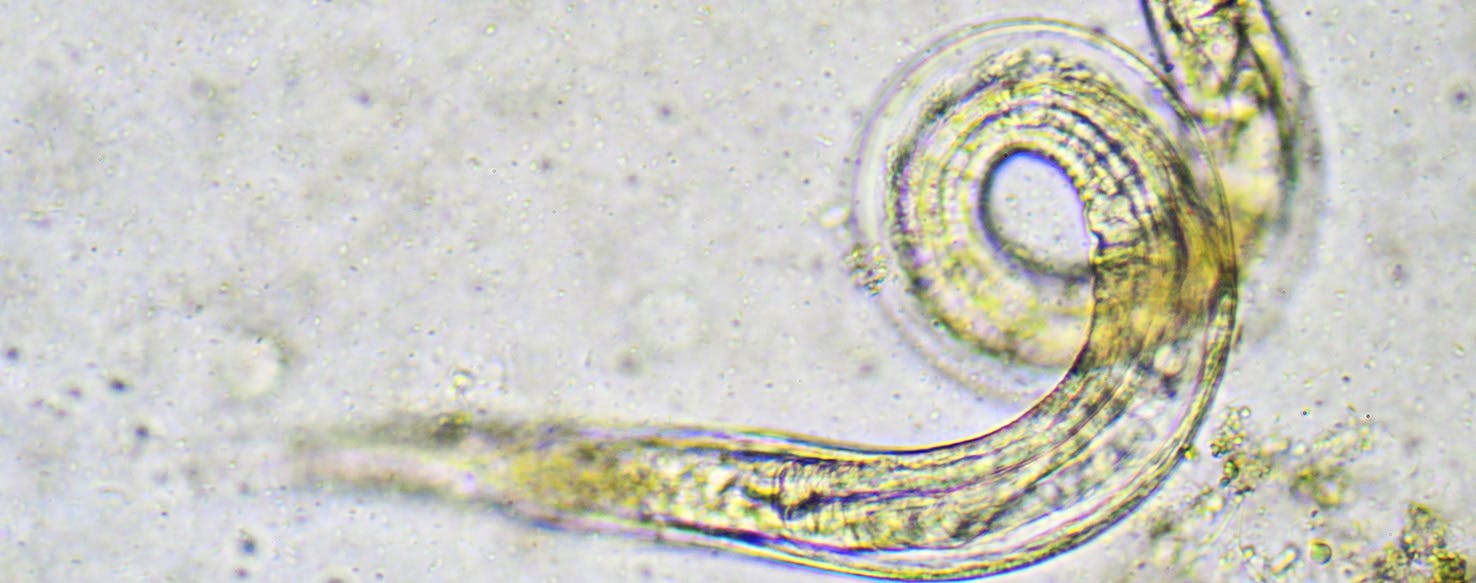
Can Dogs Get Pinworms? Wag!
They primarily reside in the small intestines and feed on blood.

Canine pin worms. They need a flea to carry them in order to infect a dog (when a dog ingests the flea). Vomiting, which can sometimes contain adult worms. After the vet has confirmed the presence of worms by examine a stool sample (0r blood test, for heart worms), the next step is getting rid of the darn things.
Roundworms are some of the most common intestinal worms in dogs. This occurs through placental blood flow. Certain intestinal worms can actually be passed from mother to puppy via the mother's milk.
Most worms stay on the intestinal tract, but some can migrate to other organs inside the dog’s body. Roundworm, ascaris, pinworms, bovine tapeworm, pork tapeworm, whipworm, liver fluke. Thus, children become infected when they don't wash their hands after visiting the bathroom, while dogs can ingest whipworm eggs when they groom fur with eggs clinging to it.
Canine worms are parasites that take up residence inside your rottweiler puppy (or dog), and if left untreated can cause some serious health issues. Roundworms and hookworms can be passed in this manner. Since worm infestations can sometimes show few to no symptoms, keep an eye out for any or all of these changes in your dog’s daily health and appearance:
How to tell if your dog has worms. The dosage is 1 tsp per 10 lbs (4.5kg) of body weight in your dog’s food each day, up to twice a day. Canine worms come in all shapes and sizes and some are more serious than others.
Tapeworms are flat, segmented worms that can live in a dog’s intestines. Canine worms are parasites that live and thrive inside a dog’s intestines. Tapeworms have flattened, segmented bodies and can average from 50 to 250 cm long, although you will usually only see individual segments.
Worms in dogs are more common than you may think. The tapeworm can reach up to a whopping three feet long if left untreated and it can have as many as 90 segments. If there were a case of canine pinworms, almost all.
Weight loss, particularly if your dog has a good appetite Tapeworm are made up of little segments the size of a grain of rice. Symptoms of worms in dogs.
Dogs typically contract worms by ingesting the worm’s eggs from contaminated soil, animal carcass, or feces. Canis is more common in puppies and. Chopped carrots also gently scrape the sides of the intestines as they pass through your dog’s gut, helping to slew away with them any worms.
To identify different dog worms, look for the worms in your dog’s feces or vomit. The adult roundworm is round, white to light brown in color, and several inches long. Here are 13 scientifically proven ways to prevent and deal with dog worms and other intestinal parasites.
Hookworms pass from one dog to another through feces. Two common intestinal worms that affect dogs in the uk are roundworm and tapeworm. Step 1, understand intestinal worms.
Roundworms can also be passed in utero, meaning they can be transmitted to the puppies while they are still in the womb. They affect dogs of all ages but are fatal to puppies. These worms live in the dog’s cecum and colon.
Dogs don't really get pinworms. What are the signs of worms in dog poop? Roundworm look like spaghetti and can grow up to 15cm long.
The same is true of fruit like pineapple, papaya and pomegranate. They are also caught in a similar way, by contact with the respective eggs. Symptoms include frequent scratching of the anal area, restlessness and inability to sleep at night.
Tapeworms tend to cause very mild disease in dogs, but in severe infections cause malabsorption of nutrients and diarrhea similar to that of a roundworm infection. Whipworms look like tiny pieces of thread that are enlarged on one end. The four main worms found in dog poop are hookworms, whipworms, roundworms and tapeworms.
The worms can be seen on the child's anus at night or in the child's stool. Deworming is simple, really—your vet will administer a drug that kills the worm, but is completely safe for your dog, through oral medicine or a shot, and the worms will pass. When a dog has worms, it’s typically going to have one or several symptoms.
Pinworms and whipworms are both intestinal worms. Roundworms look like spaghetti and may be several inches long. Some worms, in particular roundworms in puppies, can cause a potbelly with a thin spine.
Diarrhea, sometimes containing blood or mucus. There are two types of roundworms in dogs: These can range from diarrhea and vomiting to lethargy and appetite loss.
They are especially common in puppies. They are the smallest dog worms. The itchiness results from the female pinworm exiting the anus at night to lay eggs.
For heart worms, which live in the heart and. Roundworms ( toxocara canis, toxascaris leonine) are the most common intestinal parasites in dogs. If they eat a diaper filled with human pinworm infected poo, there may be worms present in a fecal specimen, but they will be incidents findings.
These worms share several common symptoms that can be identified in some cases.[1] x research source some intestinal parasites are transmitted from one dog to the next by what is. Adult roundworms live in the intestinal tracts of their hosts, consuming that host's food. Roundworms average from 8 to 10 cm, and are round with smooth bodies.
Pinworms are white and less than 1/2 inch long.
A slipped disc is the most common spinal problem seen in dogs. Dogs with these spinal injuries often have been exercising, playing, or have had some mild trauma such as a fall.

A Dog With Spinal Cord Concussion Zani's Recovery on
Loss of tone and reflexes in hind limbs due to softening of spinal cord (malacia) hyperthermia;

Canine spinal cord injury symptoms. Answered by nona wyman on mon, apr 5. (symptoms depend on the location of the tumor) limping; Symptoms of canine spinal stroke.
These can occur independently or at the same time. The most common sign is spinal pain, with some dogs also having fever, depression, and weight loss. The onset of a spinal stroke in dogs is sudden and scary.
Unable to walk or stand; Sometimes the spinal stroke symptoms don’t appear until a few moments later when the initial shock has worn off. A loss of bowel or bladder control.
Observed muscle spasms in the back or neck and increased sensitivity to touch. A spinal cord injury can cause loss of feeling and paralysis below the level of the injury. Symptoms can include everything from mild pain to complete paralysis.
Your pet will appear unsteady especially in the hindquarters and may fall while turning corners. This type of injury may lead to chronic pain, gait problems, or even paralysis, depending on the nature and location of the injury. You should also have the vet check your dog if his head is pulled in and his back is arched.
In addition to the different injuries that can occur, hemorrhage or bleeding within. However, without timely treatment, your dog’s slipped disc can quickly progress and cause irreversible spinal cord damage. Secondary sci causes physical expansion of the primary injury and results from a variety of biochemical and vascular events.
Whether you’re worried about the current state of your dog’s spine or you’d like to understand the potential threats to your furry. When disease occurs within the spinal cord, dogs often present with difficulty walking, loss of coordination or balance, partial or total paralysis, and/or pain. These include laceration of the cord, compression of the spine by a ruptured disk or blood clot, concussion of the spine associated with vertebral fracture or disk herniation, and lack of blood flow associated with blood clots or emboli.
Due to pain, your dog won’t want to stand or jump or climb stairs. Injury or damage to your dog's spinal cord may be caused by a trauma, such as a car accident or falling off the bed, or by an illness or disease, such as degenerative disc disease. Traumatic spinal cord injury (sci) is a disease with devastating effects in dogs, including paresis or paralysis and/or urinary and fecal incontinence.
Therefore, it might be a good idea for pet parents to be able to recognize the typical symptoms of slipped discs in dogs. Symptoms can include pain or weakness in the rear legs, sensitive to touch, arching its back, holding its head up in a stiff position, muscle spasms of the back or neck, reduced activity, loss of bowel or bladder control, and paralysis. A reduction in physical activities.
Symptoms of spinal cord injury. Look for the dog holding its head up in a stiff position, arching its back, muscle spasms of the back or neck, sensitive to the touch, reduced activity, pain or weakness in the rear legs, loss of bowel or bladder control, and paralysis. The onset of signs is sudden, and many are not able to walk immediately after the incident.
As the condition worsens, the pet may. Most of the time when a dog has an fce they cry out and then are suddenly unable to walk on their own. Neurologic signs can develop due to pressure on the spinal cord or, rarely, spread of infection to the spinal cord.
A spinal injury can prove to be just as devastating for a dog as it can be for a human. Mild spinal cord injuries can result in clumsy movement and mild weakness of the limbs. Loss of coordination and balance;
The canine spinal cord injury program is developing and testing methods of improving outcome from both incomplete and complete spinal cord injuries in dogs. Shivering can also be a sign of a spinal cord injury, wildly if your dog is also behaving oddly. Spinal cord disease in dogs can be very concerning to pet parents, as the symptoms are often acute, and affect their movement or control of their bodily functions.
In severe spinal cord injuries, a complete loss of movement (paralysis) and feeling can occur. Moderate spinal cord injuries can cause a greater weakness of the limbs. Your dog will stand on the upper surface of his toes and not on the pads of his paws.
This in turn leads to wearing down of his toe nails and toe bleeding. Spinal cord injuries are a common problem in dogs. Some common signs and symptoms of a spinal cord injury include loss of feeling or paralysis, decreased muscle strength, loss of bladder control, difficulty standing or pain.
Treatment contributes to the recovery and restoration of the dog’s lifestyle. When treated early, the outcomes of spinal cord injury in dogs are usually positive. They may initially yelp and cry out in pain when the incident occurs but show no signs of pain afterward.
The spinal cord conveys information to and from the brain to produce movement, sensation, urination, and defecation. Diskospondylitis occurs more often in larger breeds. Numbness to pain in areas lower than the injury;
Has difficulty lifting their head;